

How to start a candle making business (and add workshops)
How to start a candle making business: supplies, costs, safety and labels, where to sell, how to price candles, and why candle making workshops can earn more.
· 4 min read
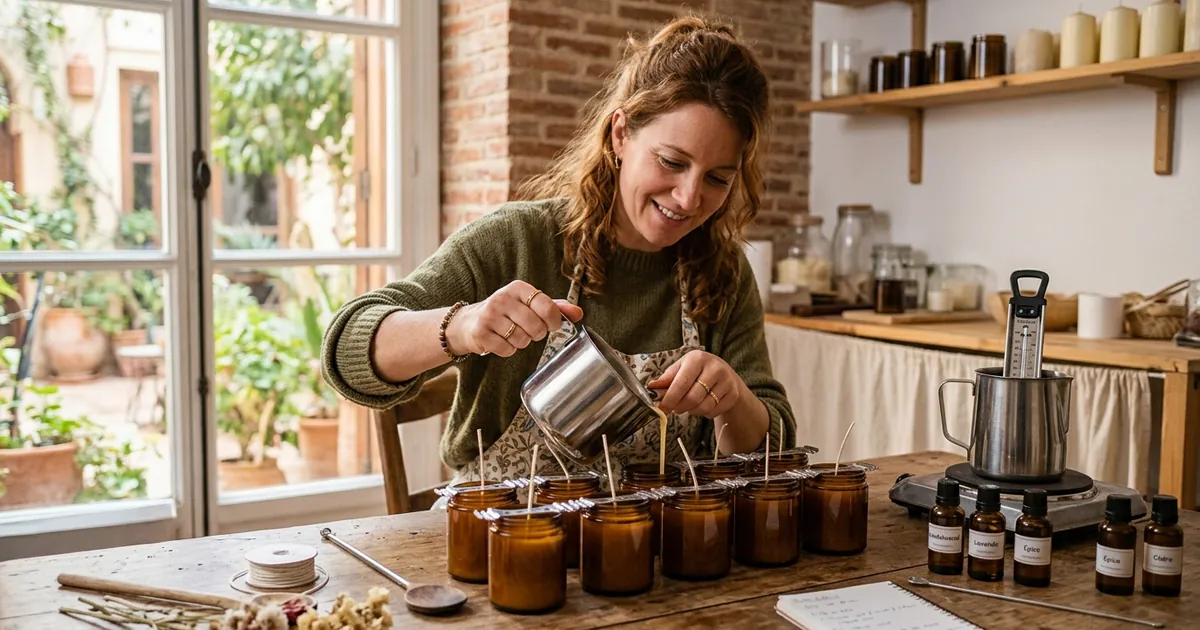
Candle making is one of the most popular creative businesses to start from home. The equipment is affordable, the product is a favorite gift, and you can begin with a few batches on your kitchen table. But turning a hobby into a business takes a bit of planning: safety, pricing, where to sell, and how to keep money coming in outside the holiday season.
This guide covers the steps, and one income stream many candle makers overlook: teaching workshops.
1. Learn the craft first
Before you sell a single candle, make a lot of them. Test different waxes, wicks, fragrance loads and containers until your candles burn evenly, don’t tunnel, don’t smoke and smell good when lit (the “hot throw”) and when cold (the “cold throw”).
Keep a notebook for every test batch: wax type, wick size, fragrance percentage, pour temperature, cure time and burn results. This becomes your recipe book and your quality control.
2. Choose your niche
The candle market is crowded. A clear angle makes you easier to remember:
- A scent story (local landscapes, seasons, books, cocktails).
- A material (coconut or soy wax, refillable vessels, recycled glass).
- A look (sculptural candles, minimalist jars, colorful pillar candles).
- An audience (wedding favors, corporate gifts, home décor stores).
3. Get your supplies
The basics for a small start:
- Wax (soy, coconut, beeswax, paraffin or blends)
- Wicks matched to your container size
- Fragrance oils and, if you like, dyes
- Containers or molds
- A pouring pitcher, thermometer and scale
- Labels and packaging
Many makers start with a few hundred dollars of supplies and equipment. Buying in bulk lowers your cost per candle once you know what sells.
4. Take safety and labels seriously
Candles are a fire product, so safety is part of the brand:
- Test every new combination of wax, wick, fragrance and container before you sell it.
- Add safety warnings to every candle (never leave a burning candle unattended, keep away from children and pets, trim the wick, and so on). In the US, many makers follow the ASTM standard for candle fire-safety labeling.
- Follow your fragrance supplier’s maximum usage guidelines.
- Look into product liability insurance before you sell at markets or to stores.
- Check local rules for running a business from home and for collecting sales tax.
This is general information, not legal advice. Rules depend on your state and city.
5. Price your candles properly
A simple method:
- Cost per candle: wax, wick, fragrance, vessel, label and packaging.
- Add your time: making, curing, packing, photos, selling.
- Add overhead: market fees, website, shipping supplies, insurance.
- Set a wholesale price that covers all of this with a profit, and a retail price around double the wholesale price.
Many new makers price too low. If your candles are well made and well branded, price them like it.
6. Decide where to sell
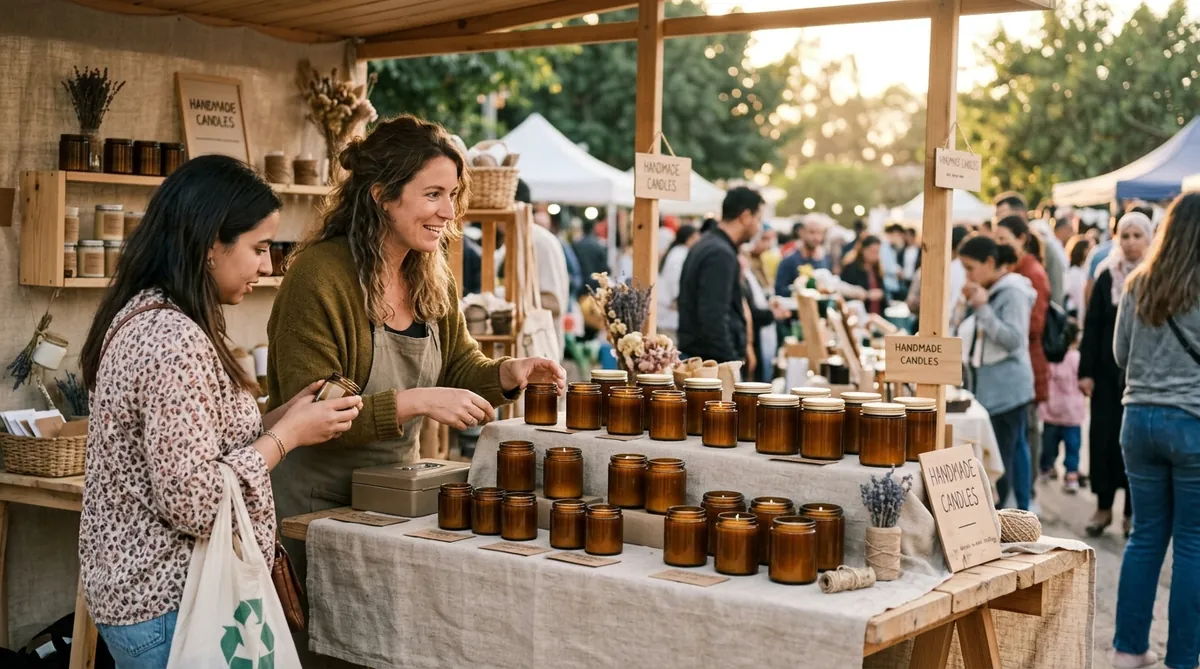
- Local markets and pop-ups: great feedback and first customers.
- Your own website or Etsy: reach beyond your city.
- Local shops and boutiques: wholesale orders, often bigger volume.
- Corporate and wedding orders: fewer, larger sales.
- Instagram and TikTok: behind-the-scenes videos of pouring sell candles.
7. Add candle making workshops
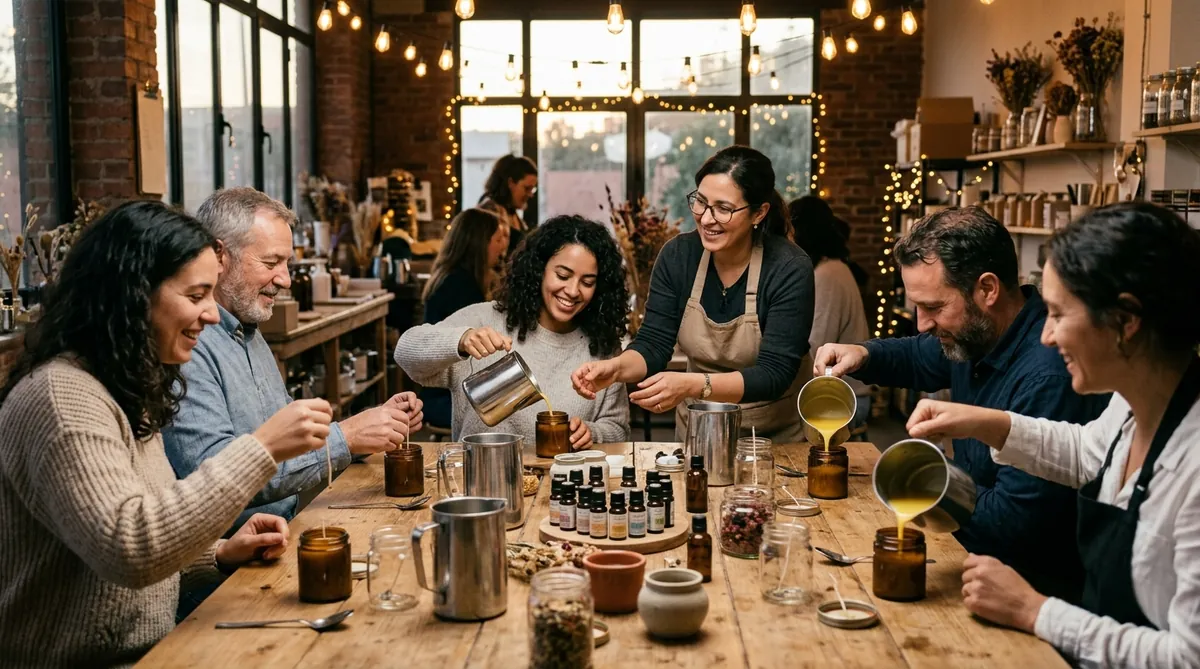
Here is the income stream many makers miss. A candle making workshop sells an experience, not only a product:
- People pay for 2 hours of fun with friends, a date night or a team outing.
- You use the same supplies you already buy in bulk.
- Each guest leaves with a candle they made, and often buys another one from you.
- Workshops sell well all year, not only before the holidays: birthdays, bachelorettes, team building.
A typical format: 8 to 12 guests, 2 hours, a choice of scents, everyone pours one or two candles and takes them home after they set. Price it to cover materials, the room and your time; many workshops charge somewhere around $40 to $80 per person depending on the city and what is included.
To run workshops without chaos, you need a booking page with your dates, a seat limit, card payment upfront and a reminder the day before. Read how to price a workshop for the numbers.
8. Build a simple routine
- Make in batches on fixed days, and let candles cure properly before selling.
- Photograph each new scent in natural light.
- Post your process on Instagram every week.
- Offer gift cards before the holidays.
- Collect emails at markets and workshops for your next launch.
Taking bookings with Passfinch
Passfinch lets candle makers sell workshop seats online: a booking page with dates and seat limits, card payments, QR tickets, reminders and phone check-in, plus gift cards for the holiday season. It costs $0 per month: 3% of each paid ticket plus card processing. See how it works for candle making workshops, or create your booking page for free.
Quick recap
- Master the craft and keep a recipe notebook before you sell.
- Pick a clear niche, take safety labels and insurance seriously.
- Price from your full costs and don’t undersell.
- Sell at markets, online and wholesale, and add workshops for income all year.