

How to plan a sound bath event: space, setup and bookings
A practical guide for sound practitioners: choosing a room, how many mats fit, what guests should bring, running the session and selling places in advance.
· 3 min read
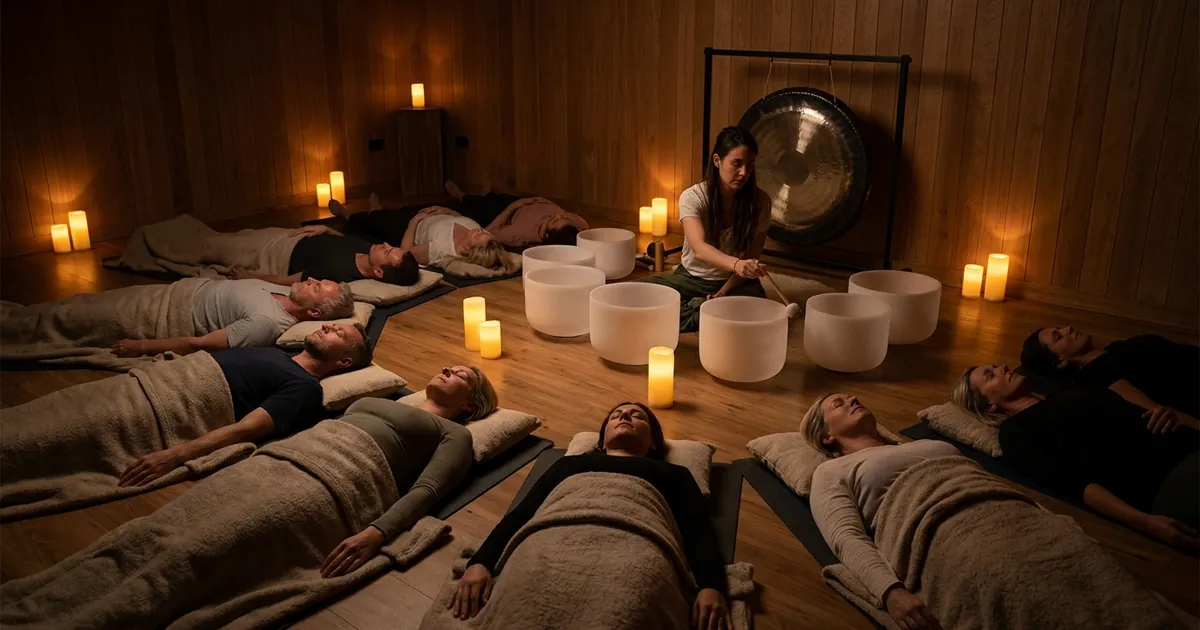
A sound bath depends on atmosphere more than almost any other event. The room, the temperature, the number of people and the first five minutes all shape how guests experience the session. The good news: most of it can be planned in advance, so that on the night you can focus on the sound.
This guide covers the practical side: the space, the setup, the flow of the session and how to fill your places.
Choose a space that stays quiet
Look for a room where you control the noise and the light:
- Quiet surroundings. Visit at the same time of day as your session. Traffic, music from next door or a busy corridor matters more than a beautiful view.
- A floor people can lie on. Clean, flat and ideally carpeted or wooden. Cold tiles need extra layers.
- Light you can dim. Overhead lights should switch off; bring a few warm lamps or candle-style lights.
- Comfortable temperature. People lying still for an hour get cold. A slightly warm room plus blankets is better than a cool one.
- Easy arrival. Clear directions, a place for shoes and bags, and toilets nearby.
Work out your real capacity
Capacity is about mats, not people standing. Each guest needs a mat, space for a pillow and blanket, and a little gap so they do not touch their neighbor. You also need clear space around your instruments and a path to walk if you move between them.
The easiest way to find your number: lay out mats in the actual room and count. Then set your ticket limit to that number, not to the room’s standing capacity. A slightly smaller group usually feels better, and you can always add a second session.
Prepare the setup
Before guests arrive, have everything in place:
- Mats laid out in a circle or rows, all facing your instruments
- A pillow or bolster and a blanket at each place (or ask guests to bring their own)
- An eye pillow or folded cloth, optional but appreciated
- Your instruments arranged and tested in the room
- Water for guests, and a quiet place to drink it after the session
Tell guests in advance exactly what to bring. “Wear comfortable, warm clothes and bring a blanket if you have one” avoids a lot of shivering.
Run the session in a clear flow
A typical session of 60 to 75 minutes follows a simple shape:
- Arrival (10–15 min before). Doors open, guests settle on their mats. Keep it calm and quiet.
- Welcome (5 min). A few words on what will happen, how to get comfortable, and that they can move or leave quietly at any time.
- Settling in (5 min). A short guided breathing or body scan.
- The sound bath (40–50 min). Your instruments, from gentle to fuller and back to quiet.
- Return (5–10 min). Silence, then a gentle signal to come back, sit up slowly and drink water.
Keep check-in short and quiet, and do it before people lie down. Late arrivals can disturb the whole room, so say in your booking details when doors close.
A note on health. Some guests may be pregnant, have sensitive hearing, or have health conditions. Invite people to tell you privately before the session, and avoid making medical or healing promises in your descriptions. Describe the experience, not a cure.
Sell places in advance
Small, calm sessions work best when you know who is coming:
- Sell tickets online with a fixed number of places. It avoids squeezing in extra mats on the night.
- Take payment when people book. Fewer empty mats, and you know your numbers in advance.
- Use the booking page to set expectations: what to bring, when doors close, how long it lasts, and your refund policy.
- Send a reminder the day before with the address, door time and what to bring.
- Offer regular dates. A monthly or weekly session at the same time builds a loyal group much faster than one-off events.
Passfinch gives you a booking page with a fixed number of places, card payment, a QR ticket for each guest, a reminder the day before, and a quick check-in on your phone at the door. See how it works for sound baths.