

How to organize a padel tournament: formats and registration
Plan a padel tournament that runs on time: choose between Americano, Mexicano and fixed pairs, build the schedule, set the entry fee and handle registration.
· 4 min read
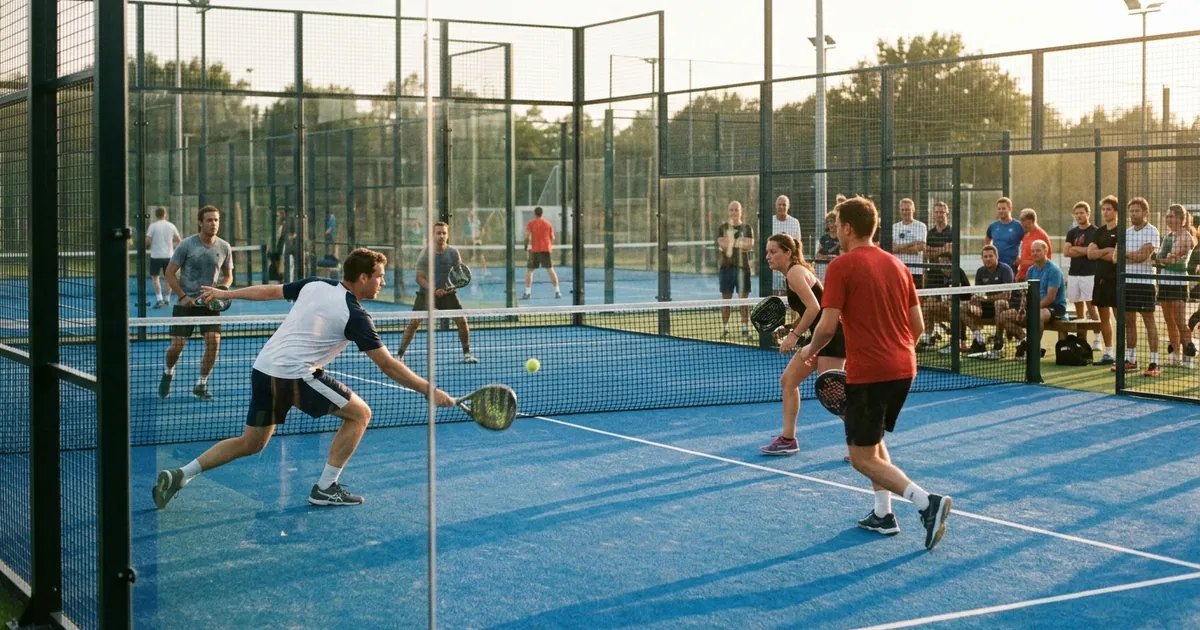
A good padel tournament feels easy for the players: they arrive, get a court, play a lot, and leave with a result. Behind that, the organizer has made three decisions well: the format, the schedule and the registration. This guide walks through each one.
Choose a format that fits your players
There is no single “right” format. Pick based on how many players you expect, how mixed the levels are, and whether people come as pairs or alone.
Americano: best for social events and solo players
In an Americano, players sign up individually and change partner every round. Each match is played to a fixed total number of points (for example 16, 24 or 32 points in total), and every player keeps their own points. At the end, the player with the most points wins.
Why it works: everyone plays the same number of matches, nobody is eliminated early, and people meet new players. It is the easiest format for a club night or a first event.
Mexicano: still social, but more balanced matches
A Mexicano starts like an Americano, but after the first round the pairings follow the live standings. Players with similar scores end up on the same court, so matches get more even as the evening goes on. It suits groups with mixed levels, but you need a reliable way to update the standings between rounds, usually an app or a shared sheet.
Fixed pairs: for competitive tournaments
If players register as pairs and want a “real” competition, use fixed pairs with a group stage followed by knockout rounds. Groups of three or four pairs make sure everyone plays several matches before the eliminations. This format needs more planning and more time, because the schedule depends on results.
Build the schedule backwards from your court time
Start from what you actually have: the number of courts and the hours you have booked.
- Estimate the length of one match. With a points-based format, a match to a fixed total often takes 10 to 15 minutes, plus a couple of minutes to change courts. Time a few matches at your club to get your real number.
- Count the rounds you can fit. Divide your playing time by the length of one round (match + changeover). Keep 15 to 20 minutes spare for warm-up and the final results.
- Work out the number of players. Each court takes 4 players per round. Two courts for an Americano means 8 players per round; with more players than places, some sit out each round, so plan the rotation fairly.
A good rule: it is better to finish 10 minutes early than to rush the last rounds or run over your court booking.
Set the entry fee
Your entry fee needs to cover the court hire for the full booking, balls (new balls for a tournament are a nice touch), any prizes, and drinks or snacks if you include them. Divide the total by the number of places you expect to fill, not the maximum, and add a margin for your time.
If you sell to pairs, decide whether the ticket is per player or per pair, and say it clearly. “Per pair” tickets avoid the classic problem of one partner paying and the other forgetting.
Handle registration and payment upfront
Tournaments live or die on the number of players. One missing player in an Americano can unbalance the whole rotation. That is why it pays to:
- Take payment at registration. Paid places mean players turn up.
- Cap the places to exactly the number your format needs.
- Use ticket types if you mix levels or formats, for example “Men’s Americano”, “Women’s Americano” and “Mixed”.
- Keep a short waitlist so you can replace late cancellations.
- Send a reminder the day before with the start time, the address and “arrive 15 minutes early for warm-up”.
On the day
- Print or display the first round before people arrive, so nobody waits around.
- Check players in as they arrive. Late arrivals are easier to handle when you know immediately who is missing.
- Announce each round clearly and keep track of points in one place.
- Finish with the results, a photo and the date of the next tournament. That last part is when most people sign up for the next one.
Quick checklist
| Before | Done when |
|---|---|
| Format chosen | Americano, Mexicano or fixed pairs |
| Court time booked | Courts × hours confirmed with the club |
| Schedule tested | Rounds fit, with spare time at the end |
| Entry fee set | Covers courts, balls, prizes and your time |
| Registration open | Paid places, capped to the format |
| Reminder planned | Sent the day before |
Passfinch gives you a registration page with paid places, separate ticket types for each category, a reminder email the day before, and a QR check-in on your phone. See how it works for padel tournaments.