

How much to charge for a cooking class (with a worked example)
Price your cooking classes so every seat pays: ingredient cost per guest, kitchen and time, group size, private events and course bundles, with a worked example.
· 4 min read
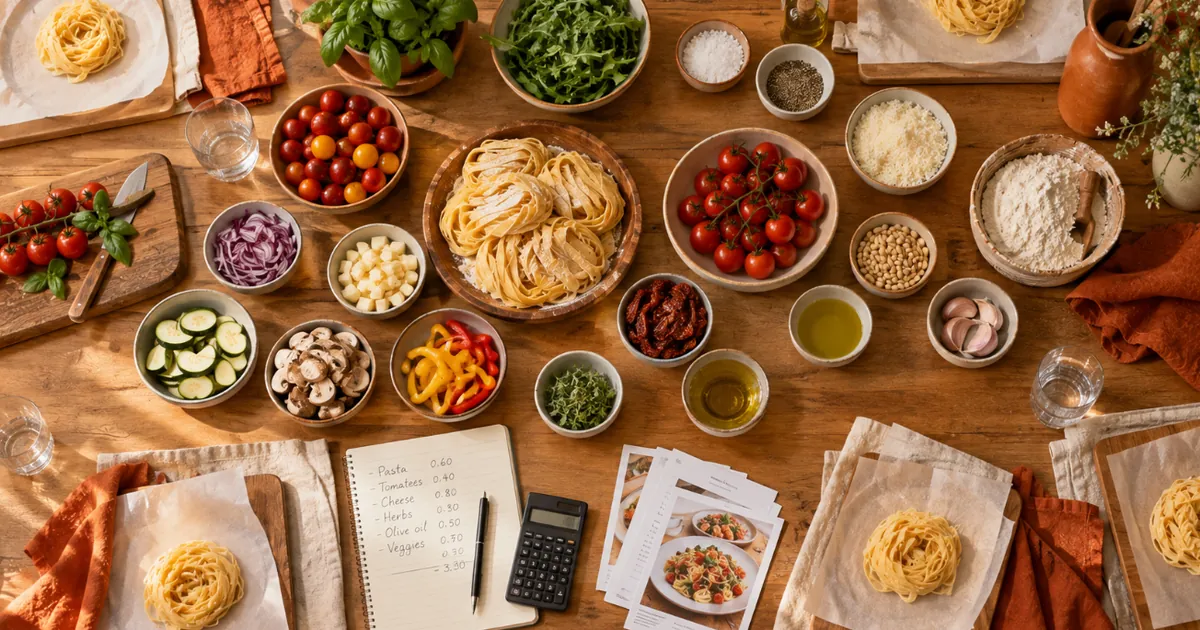
Cooking classes are one of the easiest workshops to underprice. Ingredients look cheap when you buy them for your own dinner, but multiply them by ten guests, add the kitchen, the prep, the washing up and the wine, and a “reasonable” price can quickly turn into working for free.
This guide shows how to build a cooking class price from your real costs, with a worked example, and how to price private groups and multi-week courses.
The costs that are specific to cooking classes
Start by listing every cost of one session. Cooking classes have a few that other workshops do not.
Per guest (they grow with every booking):
- Ingredients for every dish, including what guests eat during the class
- Extra ingredients for mistakes and second attempts (plan around 10 to 20% more)
- Take-home containers, recipe cards, aprons if they are given away
- Drinks, if included
Per session (the same whether 4 or 12 people come):
- Kitchen hire, or a share of your rent and utilities
- Your time: shopping, prep, teaching, cleanup. Shopping and prep often take as long as the class itself.
- An assistant, if you need one for bigger groups
- Equipment wear, cleaning products, laundry for aprons and towels
Per booking:
- Card payment and booking fees
The formula
Price per seat = (session costs ÷ seats you expect to fill) + cost per guest + margin
Divide the session costs by the number of guests you realistically expect, not by the number of stations. A class priced for a full kitchen loses money every time two seats stay empty.
A worked example: a hands-on pasta class
These numbers are an illustration. Replace them with your own.
| Item | Amount |
|---|---|
| Kitchen hire, 4 hours | 120 |
| Your time: 7 hours (shopping, prep, 2.5 h class, cleanup) at 25/hour | 175 |
| Cleaning, laundry, equipment wear | 20 |
| Session costs | 315 |
| Ingredients per guest (pasta, sauces, dessert, 15% extra) | 14 |
| Recipe card and take-home box per guest | 2 |
| Cost per guest | 16 |
With 10 stations and 8 guests expected:
- Session costs per guest: 315 ÷ 8 = 39.38
- Plus cost per guest: 39.38 + 16 = 55.38 break-even per seat
At that price your time is already paid, but the business itself earns nothing. Adding a margin of around 15 to 20 brings the ticket to roughly 70 to 75. If the class sells all 10 places, the two extra seats add almost pure profit, because the session costs were already covered.
If a glass of wine with the meal is included, add its cost per guest on top and say it clearly on the booking page.
Adjust for your format
The same kitchen can support very different prices depending on what guests get:
- Demonstration classes cost less per guest (smaller tasting portions, no individual stations), so they can be priced lower and take bigger groups.
- Cook-and-dine evenings include a full meal, so they justify a higher price. Say “includes dinner” in the title.
- Specialist skills such as sushi, bread or pastry often need special ingredients or equipment; price those costs in.
- Kids’ or family classes usually need more helpers and simpler dishes; price per child or per family pair.
Pricing private groups and team events
Birthdays, hen parties and company team events are often the most profitable bookings, because the whole kitchen sells at once and dates are booked well in advance.
- Use a flat price for the room up to a set number of guests, plus a price per extra guest. This protects you if fewer people show up than planned.
- Add a minimum spend for weekends and evenings, which are your best-selling slots.
- Charge a deposit when the date is booked.
Pricing courses and series
A four-week course gives you guaranteed income and returning students. To price it:
- Start from your single-class price.
- Multiply by the number of sessions.
- Offer a modest discount for booking the whole series, enough to feel worth it but not so much that one-off tickets look expensive.
Sell the course as one ticket so students commit to all sessions upfront.
Show one clear, final price
Whatever number you land on, show buyers one price that includes everything they get. Fees that appear only at checkout make people hesitate, and cooking classes are often bought as gifts, where a clean price matters even more.
Quick recap
- List per-guest, per-session and per-booking costs, including shopping and prep time.
- Divide session costs by the guests you expect, not the stations you have.
- Add cost per guest and a margin.
- Price private groups as a room with a minimum, and courses as a bundle.
- Show one clear, final price.
For the general version of this method, see how to price a workshop. And when you are ready to open bookings, Passfinch lets you sell each class date with a fixed number of places, take card payment upfront and get paid out weekly: see how it works for cooking classes.